Reflexivity in (Forced) Migration Studies
A project funded by the TRA4 in 2024/25 and July-Dec 2026.

The project began with the observation that research on (refugee) migration takes place in a highly polarized context. At the same time, there was a great need for evidence-based information through science communication, as migration patterns and control measures are complex. Given the sensitivity of this issue involving vulnerable people, a reflexive-critical attitude of researchers is particularly important, both in the research process and in communicating the results to the broader public.In order to reflect on the role of academia and its contribution to a sustainable approach to displacement and migration, we recognized the need for interdisciplinary and transdisciplinary collaboration. Our goal was therefore to integrate diverse perspectives and methods into research on (displacement-related) migration and to establish partnerships with non-academic stakeholders. Bonn offered particular potential for our project to test such collaborative formats of joint knowledge production on displacement and migration. The city boasts a high concentration of expertise in the research sector, both in university and non-university research and practice. This diversity of research approaches and focal points provided an ideal starting point for transdisciplinary dialogue and joint reflection. In regular roundtable discussions, we brought colleagues together to discuss topics and points of contention where academia and non-academic practice faced challenges.
Building on previous events and approaches, the network has developed a concrete follow-up initiative: a pilot project funded by TRA 4 (Transdisciplinary Research Focus ‘Individuals, Institutions, and Societies’ at the University of Bonn) on ”Co-creative Research in Post-Migrant Democracy (Kokreativer Forschung in der postmigrantischen Demokratie)." Using case studies in two cities, the project examines how existing community initiatives can contribute to the democratic shaping of a post-migrant society and expands the collaboration to include new partners such as Bonn-Rhein-Sieg University of Applied Sciences and the Halle-Neustadt Neighborhood Management.
The project is being carried out in cooperation with the Bonn Research Alliance (BORA) and the Bonn Institute for Migration Research and Intercultural Learning e.V. (BIM).
Projekt Team
Dr. Maria Ullrich, Forum Internationale Wissenschaft (FIW)
Dr. Lena Laube, Forum Internationale Wissenschaft (FIW)
Prof. Dr. Conrad Schetter, Bonn Center for Conflict Studies (BICC)
Maarit Thiem, Bonn Center for Conflict Studies (BICC)
Dr. Sandra Gilgan, Bonn Research Alliance (BORA)
Jure Leko, Bonn Institute for Migration Research and Intercultural Learning eV (BIM)
Kerstin Rosenow-Williams (H-BRS)
Alina Bergedieck (H-BRS)
Dr. Juliane Dame (GIUB)
Prof. Dr. Kathrin Hörschelmann (GIUB)
Bonn Platform Forced Migration Studies
Past Events
IMPULSE Café
On March 18, we welcomed two guests who shared insights and reflections on the topics of mobility, networks, and the local impacts of migrant workers. These insights are based on their respective doctoral research in Italy and Indonesia:
- Ayesha Hussain, University of Bonn, Bonn Center for Dependency and Slavery Studies (BCDSS).
- Dr. Retno Widyastuti, University of Bonn, BIGS Department of Oriental and Asian Studies, Division of Southeast Asian Studies.
On May 20, we welcomed guests who, based on their respective research, shared insights and reflections on the topic of access to the labor market and experiences of discrimination among refugees and Eastern European migrants in Germany:
- Prof. Dr. Kerstin Rosenow-Williams and Dr. Alina Bergedieck (Bonn-Rhein-Sieg University of Applied Sciences (H-BRS)): Focus on the labor market integration of refugee women
- Prof. Dr. Michael Sauer (Bonn-Rhein-Sieg University of Applied Sciences (H-BRS)): Focus on sustainable skilled migration
- Dr. Jure Leko (Bonn Institute for Migration Research and Intercultural Learning (BIM e.V.)): Focus on discrimination against Eastern European migrants in the labor market
- Kalie Kerpaci (Humboldt Fellow at the bicc (Bonn International Centre for Conflict Studies)): Focus on the challenges faced by healthcare professionals from Albania and Kosovo in Germany
On November 18, two guests provided insights into the topics of displacement, displacement, and agency, and shared reflections from the perspective of slavery research:
- Dr. Benjamin Etzold, bicc (Bonn International Centre for Conflict Studies) & Bonn Center for Dependency and Slavery Studies (BCDSS), University of Bonn
- Dr. Lotte Pelckmans, Centre for Advanced Migration Studies, University of Copenhagen, and Senior Fellow at the BCDSS, University of Bonn
More Information to be added.
More Information to be added.
To be added.
Roundtable
Flyer Roundtable.
© FIW
On March 14, 2024, the 3rd Roundtable on Forced Migration Studies took place at Migrapolis in Bonn under the title: “What Moves Bonn? Our City in the Context of Refugee Flight and Migration.”
At this roundtable, scholars discussed their experiences and perspectives with practitioners from, among others, migrant self-help organizations, government agencies, NGOs, and the volunteer sector, with the aim of gaining a better understanding of the city of Bonn in the context of displacement and migration.
Following presentations by Jure Leko (Bonn Institute for Migration Research and Intercultural Learning e.V.), Imamudin Hamdard (Afghanistan Studies & Cooperation Center e.V.), and Oleksii Nazarenk (Ukrainians in Bonn e.V.) on the engagement of civil society actors in Bonn, a joint exchange took place at four tables with different topics in a World Café format.
At Table 1, moderated by Lena Laube and Maria Ullrich, participants used a map of Bonn to discuss which locations in Bonn they associate with flight and migration or visit as part of their activities. The discussion made it clear that these locations are subject to constant change and that migrant groups are fragmented; that is, different places can be and become significant for different situational contexts and individuals.
Table 2, moderated by Bahia Amellal and Sandra Gilgan, explored needs and future formats for dialogue in the context of displacement and migration in Bonn. From the participants’ perspective, issues related to access to the labor market and language acquisition proved to be particularly central. They also observed a distinction in local discourse between “immigrants we want” and “undesirable immigrants,” a distinction that is partly reflected in local welcoming practices.
Table 3, titled “What Moves Us,” moderated by Benjamin Etzold and Jure Leko, discussed current issues and challenges in Bonn’s migration context. Some of the participants observed an increasing fragmentation of urban society as well as polarization around issues of immigration. They saw potential in collaboration between scholars and non-academic local actors to help objectify the discourse.
You can view the event agenda at here.
On June 12, 2024, the 4th Roundtable on Forced Migration Studies, titled “Exploring Ethical Questions in Forced Migration Studies,” took place at the Forum Internationale Wissenschaft.
The event’s thematic focus stemmed from the fact that researchers and non-academic practitioners alike face significant ethical challenges when addressing issues in the context of (refugee) migration, not least due to the increasing politicization of the field and the particular vulnerability of refugees. To do justice to the complexity of these challenges in migration research, the roundtable employed a multi-perspective approach for joint reflection. The aim was to examine ethical dilemmas and discuss existing research approaches with regard to their practical implications.
The substantive basis for the joint exchange was provided by short presentations by Dirk Lanzerath (University of Bonn), Shaden Shabouni (Bonn International Centre for Conflict Studies), and Jennifer Louise-Robinson (University of Osnabrück). These sessions provided an introduction to research ethics and, drawing on specific research projects related to (refugee) migration, explored practical experiences in implementing ethical principles. To determine the extent to which ethical considerations can and should be integrated into research, discussions were then held at four roundtables, each focusing on different questions.
Table 1, moderated by Lena Laube and Sandra Gilgan, examined the role of academic institutions in research ethics. Participants at this table considered it important for the research process to be institutionally supported in order to provide reassurance to both sides (researchers and research participants).
Table 2, facilitated by Jure Leko and Bahia Amellal, addressed the role of positionalities in research. Participants emphasized that inequalities among the involved actors can have a significant impact on research and should be taken into account throughout the entire research process.
Table 3, titled “Nothing about us without us. Involving refugees in research and policymaking, opportunities and challenges,” led by Maarit Thiem, Oksana Koshulko, and Shaden Shabouni, addressed ethical issues from the perspective of refugees. Among other things, it was considered important that ethical guidelines be followed when working with refugees to ensure that the research does not harm them (the “do no harm” principle).
Table 4, moderated by Maria Ullrich and Elisabeth Kirndörfer, addressed from a meta-perspective the question of which ethical aspects the Roundtable on Forced Migration Studies itself must take into account. Such ethical challenges can arise, for example, when the knowledge of non-academic practitioners is not valued and potential power dynamics between the groups influence the discussion.
You can view the event agenda here.
You can find the roundtable agenda here.
On May 14, 2025, the 5th Roundtable of the Platform for Forced Migration Studies took place at the University Forum in Bonn under the title: “Responsibility in forced migration studies: ethics, safety, security.” The event brought together experts from academia and the field to collectively address current ethical issues that arise in the research process—ranging from data sensitivity and research ethics to the safety of the individuals and communities involved. Following opening remarks by the organizers, a moderated panel discussion took place with the following guests: Dr. Galina Selivanova (FIW, University of Bonn), Dr. Jana Kuhnt (German Institute of Development and Sustainability (IDOS)), and Nadine Kollmeyer (Research Officer for Ethics, University of Bonn).
The discussion was characterized by an open and critical reflection on the responsibility that researchers bear—both individually and institutionally—in an increasingly politicized field such as migration research. A central aspect was the question of power dynamics within the research process and the need to apply research ethics standards consistently and in a context-sensitive manner. Specific challenges in handling sensitive data, the protection of interview participants, and the role of researchers as potential mediators or even political actors were also addressed. Following the panel discussion, the event invited an open exchange. Participants took the opportunity to share their own experiences, ask questions, and discuss existing areas of tension in research. It became clear that a continuous dialogue on ethical issues, as well as on institutional frameworks, is necessary to conduct research responsibly in this sensitive field.
On November 6, 2025, the 6th roundtable of the Bonn Platform for Forced Migration Studies took place at Migrapolis in Bonn under the title: “Living Migration – Shaping Democracy – Strengthening Communities.” The event brought together experts from academia and the field to discuss how migration shapes cities, villages, and neighborhoods, raising new questions, experiences, and challenges in the process. Migration is just one facet of social diversity, offering new perspectives on fundamental questions of belonging and democratic coexistence. We view migration as an opportunity for democracy and as an impetus to learn from one another and to continually reshape social coexistence. Together, we want to explore how democratic experiences in the local migration context can be made visible and put to use—as a resource for a vibrant and resilient democracy. We hereby cordially invite scholars from all disciplines and institutions (universities, universities of applied sciences, non-university research institutions, think tanks), practitioners from non-governmental organizations, associations, politics, or city administration, as well as representatives of migrant self-organizations to our sixth roundtable. We would like to exchange experiences regarding the shaping of local democracy in the context of migration (and beyond) and explore the following questions, among others:
- What can we learn from (post)migrant coexistence to understand diversity as a social strength?
- What challenges are we currently facing in shaping local democracy?
- How can experiences from migration contexts be used to strengthen local democratic communities?
We are an initiative of the University of Bonn, the Bonn Centre for Conflict Studies (bicc), and the Bonn Institute for Migration Research and Intercultural Learning (BIM) e.V.. The goal of the roundtables is to bring together stakeholders in Bonn on the topics of displacement and migration, and to provide a platform for exchanging experiences, peer consultation, and collaborative learning. With their interactive nature, the roundtables aim to encourage participants to contribute their own topics and engage in dialogue.
Related events:
Panel on the topic: Co-production of knowledge on displacement and reception in the local context
Discussion based on the example of an initiative in Bonn
Given the complexity of refugee processes and the significant power asymmetry in this field, research requires a transdisciplinary approach that seeks exchange between scholars from various disciplines and non-academic actors and prioritizes the joint production of knowledge. What are the pressing research questions? How do we conduct research without causing harm? How do we design mutual access to knowledge resources? We assume that the local context is particularly well-suited for collaboratively addressing such questions. This is partly because personal encounters in the local context foster processes of understanding and facilitate shared social connections. On the other hand, local governments have significant leeway in shaping reception processes and are often pioneers in developing new approaches to dealing with migration flows. It therefore stands to reason that concepts such as “local citizenship” or “urban solidarities” have emerged precisely at the intersection of urban studies, citizenship studies, and (refugee) migration research, demonstrating the need for terminology to describe (post-migrant) coexistence at the local level. This creates potential to overcome knowledge silos and produce knowledge through new associations (see Hansen 2022). The process of co-production is characterized by the collective overcoming of power relations and simultaneously generates forms of knowledge that can be effectively integrated into existing intersections in academia, civil society, and politics. Using the example of the Bonn-based initiative “Platform Forced Migration Studies,” we will discuss the potential that the local context holds for the co-production of knowledge on displacement and reception. We are interested in identifying the conditions for success and the challenges from the perspective of actors in academia, local government, and civil society, as well as how cooperative learning and reflection can be facilitated. Discussants:
- Elisabeth Kirndörfer, University of Bonn
- Jure Leko, Bonn Institute for Migration Research and Intercultural Learning e.V.
- Mila Brill, Cologne University of Applied Sciences
Further information here.
E-Mail-Liste
Kontakt
We have set up an email list of currently about 100 people to share information on the project as well as to inform about further activities on forced migration studies in Bonn. Please subscribe through the following link: https://listen.uni-bonn.de/wws/subscribe/bonnplatform-forcedmigration?previous_action=info
Contact: Dr. Maria Ullrich
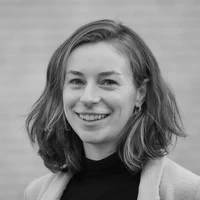
Dr. Maria Ullrich
Poppelsdorfer Allee 24
53113 Bonn

Dr. Lena Laube
Postanschrift: Poppelsdorfer Allee 24
53115 Bonn
